Materials for Future Buildings

The New European Bauhaus conference (22-23 April 2021) was inaugurated by a speech by the President of the European Commission, Ursula von der Leyen. She outlined an ambitious plan of challenges and changes that await us in the forthcoming years. Her speech probably surprised most of the participants – they were not prepared for such a bold statement. It seems that it’s time for decisive action that can really change the course. There is a lot of work to be done. It’s going to be difficult, but interesting and satisfying.

Von der Leyen put sustainability next to aesthetics and accessibility as a European development direction. Her speech leads us to the welfare state. This time is to take care not only of people but also of Nature.

In her speech, the President emphasises the role of building materials. She recalled that the historic Bauhaus promoted two new materials: steel and concrete. Meanwhile, it is time for us s to build using materials that release less carbon dioxide during production, preferably absorbing carbon. According to von der Leyen, the future belongs to building materials that are based on natural resources such as wood and bamboo. Materials that support the circular economy and decarbonisation.

Such a declaration from one of the most influential politicians and other officials set the direction for the entire Europe and sent a clear signal: we need a shift. 

An important voice in the material challenge, Björn Florman, founder of the Swedish Material Library in May 2020, said in an interview for dezeen:

Before we started to invent plastics made from fossil-based oil, we were already using bioplastics, and many of those plastic materials are the ones being perceived as ‘new’ today. They are not new, they have just been forgotten for 70 years or so.

Heterogeneous and perfect materials were one of Le Corbusier’s obsessions, which is probably why they entered the architect’s primer without any reservations. Today, the movement of searching for and producing new materials is gaining momentum.I’ll present a few projects and designers dealing with this topic.

Materiom is a platform that collects information about the new generation of materials and popularises their production. The collection contains recipes for materials that fit into the regenerative design and are made available on the basis of open knowledge. The creators of the platform emphasise that the production of the material should be available and possible in the kitchen, based on the raw materials available in the immediate vicinity. They remind us that materials can be produced from virtually anything, including agricultural ‘waste’. The materials that we find on the platform are at a low technological readiness level (so-called TRL3 or TRL4) – so far they do not have a fully defined function and we do not know their durability, abrasion, flammability, or actual environmental impact. Some of them are designed as a filament for 3D printers, for example, MS01, consisting of clamshells and alginate, or another made of eggshells and xanthan gum. I don’t know in which direction the platform will go, I’m waiting for more information about materials (durability, carbon footprint, abrasivity) and a critical look at the content, the road from TRL3 to TRL9 is long.

eco2block

Future Materials Bank is a platform initiated by the Nature Research Department at the Jan van Eyck Academy in Maastricht, in collaboration with the Master’s Degree in New Materials at Central St Martins, London. Together, they look for non-toxic, biodegradable or sustainable alternatives to materials. The platform brings together 45 organisations related to art from Asia, Latin America and Europe, creating the Green Art Lab Alliance. Like the previous library, it’s under development and the materials contained there can’t be used for serial or mass production.

In Portugal, there are engineers and designers that have started working on alternative construction materials. For example, eCO2blocks is a carbon-neutral technology that looks to replace building blocks used in wall construction (today typically made of brick or concrete). A team of three scientists from Coimbra have been participating in programs called Climate Launchpad and Climate KIC to accelerate the introduction of their product to the market. Their material uses industrial waste to create new building materials.

As mentioned in the introduction, bio-materials are the most sought after. This is a very important signal for Portugal, where vernacular architecture could be characterized not only by the diversity of spatial forms but also by its use of materials. It has used both local stones and plant-based materials – principally fibers. Fibers use was closely connected to agriculture. Straw is a by-product of barley, wheat or rye production used for the production of flour. The biodiversity of agriculture has changed but huge amounts of so-called by-products become compost, although they could stay within the biological cradle-2-cradle production of thermal insulation, thatching or finishes. There is a great, undiscovered possibility for cooperation between the food and construction industries. 
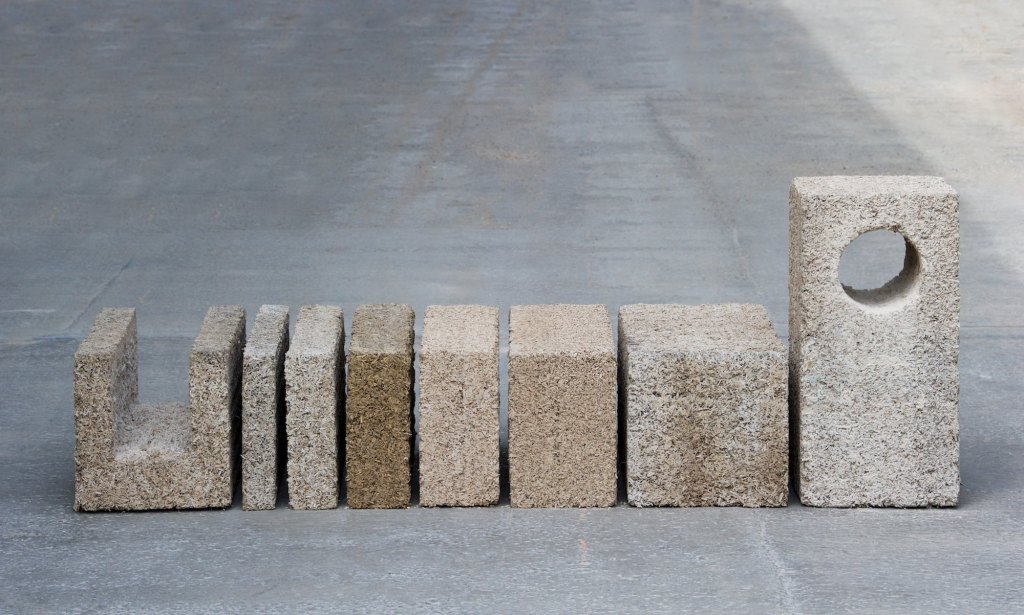
Hempcrete blocks

Research on materials has been going on for a long time, but it seems that today, in the era of the climate crisis and subsequent declarations of the European Union (the Circular Economy Directive and the New European Bauhaus), its pace will increase. Architects and investors all around the world are looking for ‘new concrete’ and ‘new steel’. We still do not know about viable substitutes for some of the most frequently used materials such as OSB boards (which are toxic), GFRC panels,  etc. New materials are just waiting to not only be discovered but also used. Most importantly, this time we’re not looking for one magical solution, but for the diversity of alternatives that are connected with the local condition and resources.

Adrian Krężlik
Embodied Carbon of HVAC Systems

We’ve mentioned in previous articles how Life Cycle Assessment (LCA) of buildings is an engineering problem that is becoming more and more relevant. As action for climate change mitigation becomes more urgent, engineers are looking for more sources of energy savings, that is, opportunities for energy efficiency. Heating, Ventilation and Air Conditioning (HVAC) systems are known to be the cause of massive amounts of energy use in buildings, reaching almost 50% of operational use in developed countries [1]. From the perspective of Portugal, it is crucial to understand their impact, since only a small portion (23%) of the households in Portugal counts with a fixed heating equipment and even smaller with air conditioning systems (10%), but in recent years these numbers have shown the tendency of growth [2]. There is no widespread knowledge regarding the embodied carbon of these systems, but early studies are being conducted with more and more detail. It turns out, the impact of their energy use during operation may be very similar to that of their manufacturing and installation, and systematic replacements over a building’s lifetime.

Let’s brush up on the typical life cycle phases of a product (as defined by the European Committee for Standardisation in the ISO 14040 and 14044 standards):

A. Construction

B. Operation

C. End of life

D. Reuse

Not all these energy-using phases need to be considered in every single study on the problem. It may turn overly complex, and some phases may not even be worth accounting for. For instance, end of life of HVAC systems is practically irrelevant carbon-wise, due to the relative ease with which they are disassembled and disposed of. So in this article I will analyse only the cradle-to-grave cycle (without Disassembly nor Reuse).

What constitutes an HVAC system? Any piece of active technology that heats, cools, or moves air into, out of, or within a building. Active means that it consumes power (e.g. burns natural gas or uses electricity). The technology needs power because, as opposed to the flows seen in passive strategies, heat or air are forced to flow in the opposite direction in which they naturally would if the building space were left alone. That is, heating a room that is already warmer than the outdoors during wintertime, or the opposite. Think of it as pushing a big rock up a hill with growing steepness instead of letting it roll down to the bottom. Or more accurately: holding it at a specific point on the hill. These scenarios would require you to exert physical power onto the rock. The specific point of the hill can be thought of as the set point of the HVAC system’s thermostat, and the slope’s steepness as the difference in temperature with the outdoors.

A recent experimental study in six small healthcare centres in Extremadura, Spain, showed that the embodied carbon of their HVAC systems amounted to 2.3 times that of the operation phase considering 15 years lifetime for the HVAC systems [3]. We should note that Badajoz in Extremadura suffers average minimums of 4.5ºC in January and average maximums of 33.7ºC in August (with 438 cooling degree days, and 1372 heating degree days). This means that not only are health centres in continuous operation (thus their HVAC systems practically don’t switch off), but both heating and cooling are essential at different points during the year. It’s safe to say, then, that proportion of embodied-to-operational carbon is alarming. Why? Well, when engineers approach energy efficiency in buildings, they usually look at two things: heat flows across the building envelope and efficiency of the selected HVAC technology. In other words, they seek to reduce the operational use (life cycle Phase B) and do not look into phase A. Mining the materials, transporting, manufacturing, and installing are extremely energy-intensive activities, and prone to using carbon-base fuels (e.g.: petrol used in transport or mining), as proven in the mentioned ratio.

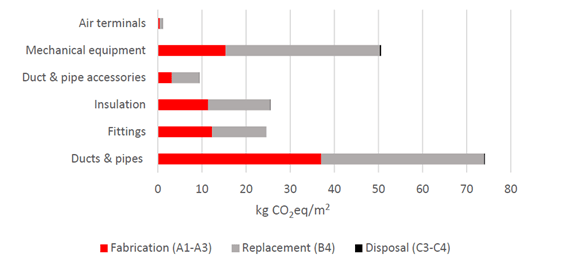
To understand how to tackle this issue, we must dive into the details of the Phase A of HVAC systems. Try the following thought exercise: think of a simple packaged air conditioning unit. Think of all the parts that constitute the cooling system: ducts, mechanical ventilation devices, fittings, air terminal, and the list goes on. And now imagine all the work put into creating those parts and bringing them together. This results in embodied carbon for each part, which may then be added up to the total. The graph below shows the results of a study based on Building Information Modelling (BIM) of Siemens’ office building in Zug, Switzerland [4]. It shows not only how energy-demanding maintenance can be (reflected in the Replacement phase) along the studied 60 years, but also shows that the impact of piping must not be overlooked. When annualising, the embodied carbon is 1.32 kgCO2eq/m2 for Fabrication and 1.70 kgCO2eq/m2 for Replacement. Compare this to 1.25 kgCO2eq/m2 for Operations and you will probably agree on the importance of LCA in HVAC.

Embodied carbon results for an HVAC of an office building in Switzerland [4]

The numbers above tell us that the issue of human thermal comfort is more complicated than we were aware of. The fact that this discussion is barely starting is worrying. On a personal note, I have not seen significant mention of HVACs’ embodied carbon, even as I sat through a specialisation programme in Sustainable Energy Systems that went through Energy in Buildings thoroughly. In Portugal, wood and coal-powered sources of heat are still very common, but modernisation of the economy and the households are leading to adoption of electrified HVAC systems such as heat pumps or simple ACs (in the South). Each piece of HVAC system is different, the technology is ever evolving, and the climate is changing. This means there can be a significant range of values for embodied carbon, depending on numerous variables. In future articles, we’ll look into some of the specifics of each technology. But for now we can agree on one thing: HVAC systems’ embodied carbon is a pressing issue in today’s and tomorrow’s built environment.

Mateo Barbero

Co-founder

[1] S.K. Alghoul: A Comparative Study of Energy Consumption for Residential HVAC Systems Using EnergyPlus (2017)

[2] Vilhena A. et al., O parque habitacional e a sua reabilitação. Análise e evolução 2001–2011, INE (2013)

[3] Justo García-Sanz-Calcedo et al.: Measurement of embodied carbon and energy of HVAC facilities in healthcare centres (2021). Journal of Cleaner Production.

[4] Kiamili, C. et al: Detailed Assessment of Embodied Carbon of HVAC Systems for a New Office Building Based on BIM (2020). Sustainability

PV’s Embodied Carbon

Looking back at 2020, one thing will naturally come up in most people’s mind. The pandemic’s reach is global and very much ongoing, with only a handful of countries now flirting with a“back to normal”. Beyond the ubiquitous health crisis, we are all familiar with the economic implications that it brought about as well (Portugal’s GDP dropped a historical -7.6%, for instance). However, every so often a news outlet somewhere would communicate the rare good piece of news which would circle the world and quickly fade. Most might remember the before-and-after image of air pollution in China’s cities during the country’s lockdown. Or the slump in carbon emissions that took place virtually everywhere. But why is this? Remember the word “carbon” is a concept that standardises and groups all greenhouse gases.

Well, economic activity and energy use are proven to be tightly coupled. And energy use is in turn coupled to carbon emissions [1]. Rarely has a country grown without worsening their emissions due to higher consumption, transport, construction, and more. With economic activity returning after a drastic drop, emissions are expected to surge at historical values. We are all aware of the urgent need to deepen the change from a strictly economic to a broader sustainable development. And the question of decoupling GDP and emissions is more relevant than ever. The answer to this is either to reduce the amount of energy used per unit of activity, or to reduce the amount of carbon emitted per unit of energy used (or even be “energy positive”). Put simpler: use less or use cleaner. Of course, both can be attacked at the same time.

When this problem is brought to building energy use, using less can be understood as having more efficient buildings. And using cleaner, switching to renewable sources of energy such as onsite solar PV systems. But there’s a catch: renovating a façade or installing a PV system (with wiring, batteries, an inverter, and more) are economic activities that bring about energy use and emissions themselves. But this doesn’t mean that they are useless — what we need to look at is their overall effect by quantifying how much carbon their existence brings and avoids in the different phases of their lifetime. In other words, understanding their embodied carbon and comparing them to business as usual, with our environmental goals in mind.

Let’s concentrate on the use cleaner part. Research on carbon that is embodied by different electricity generation technologies is widely available. These studies typically offer a range of values, as each installation carries with it specific mining, manufacturing, transport, and installation/construction needs which use up different amounts of energy (in short, Life Cycle Assessment studies). However, a mid-point estimation can be taken for reasonably accurate comparisons against other technologies.

Take the Portuguese case. The graph below compares 3 scenarios for a typical Portuguese dwelling’s electricity consumption profile of 3293 kWh/year [2]. The first scenario, in yellow, shows what emissions look like with the current portuguese energy mix. That is, considering the grid’s carbon intensity based on the existing power plants and onsite generation (a combination of low-carbon and high-carbon sources [3]). The second, in green, shows what would happen if that dwelling installed PV panels. A typical residential PV installation is considered, replacing 1720 kWh/year of what is taken from the grid [4] (a bit over half of the total of 3293 kWh/year). The third scenario, in red, shows an extreme hypothetical situation in which all electricity is produced in a coal plant in the baseline scenario. This is not true for Portugal, but it is somewhat representative of other countries, such as Poland (with a whopping 74% of electricity coming from coal [5]).

Note onsite PV starts at 3740 kgCO2eq in year 0, as we are accounting for the carbon it embodies during its manufacturing and installation.

What we see is that PV mitigates emissions, no matter the case. When replacing coal, less than 2 years of using 1720 kWh/year of PV-generated electricity already offsets its embodied carbon (see the red line crossing the green line). When comparing to the current Portuguese scenario, carbon flow for the PV implementation proves to be better somewhere around the 7th year. Keep in mind we are being practical and considering a real decision case, so we are not accounting for the embodied carbon of the existing grid infrastructure (as the damage has already been done). So we are being very demanding with PV in this study — even unfair. The embodied carbon of the PV installation is the reason why the green line starts above the red and yellow ones in year 0. Once this is offset, every year is pure mitigation (remember: renewables don’t make carbon “disappear” nor do they absorb it, they just avoid emissions from other dirty sources). And why stop here? Buildings can be low-carbon, but they can even be “energy-positive”. This means they generate more (cleaner) electricity than they consume, which can be injected into the grid and be used up by another building that needs it.

What all this shows is that even by conservative estimations, PV offsets its own negative effects. And this needs to be common knowledge. Almost all technology has negative effects. In fact, virtually all activity implies direct or indirect carbon emissions. This in itself isn’t a valid reason to dismiss technological changes or energy uses, as the whole picture must be analysed. A combination of use less and use cleaner is what engineers and designers should strive for. And why stop there? Let’s start thinking energy positive and start generating more than we consume.

Mateo Barbero

co-founder

— — — — –

[1] Haberl, Helmut et al. (2020). A systematic review of the evidence on decoupling of GDP, resource use and GHG emissions, part II: Synthesizing the insights. Environmental Research Letters.

[2] https://www.odyssee-mure.eu/publications/efficiency-by-sector/households/electricity-consumption-dwelling.html

[3] https://www.apren.pt/contents/publicationsreportcarditems/boletim-renovaveis-maio-2020.pdf

[4] PV carbon data: Stephen Finnegan, Craig Jones, Steve Sharples, The embodied CO2e of sustainable energy technologies used in buildings: A review article, Energy and Buildings, Volume 181, 2018, Pages 50–61, ISSN 0378–7788

[5] https://www.eia.gov/international/analysis/country/POL

Learning from vernacular

When, in 1964, Bernard Rudofsky finally opened the exhibition Architecture without Architects: A Short Introduction to Non-Pedigreed Architecture at the Museum of Modern Art in New York, he caused quite a stir. The catalogue started a new chapter in modern architecture based on photos and commentary of vernacular construction (that is, knowledge passed on from generation to generation). He took a bucolic position, of admiration for vernacular patterns, but without sufficient attention to the essence of this architecture, its causes and identity. A bit earlier, in 1957, Sibyl Moholy-Nagy, an American critic of German origin, had attempted such a reflection but her book had never received such reverberation. In Native Genius in Anonymous Architecture she explored the relationship between rural architecture and the environment, indicating solutions from which one can learn to better design in a specific climate, based on local materials and respecting identity. This text should be considered pioneering in the context of environmental protection and architecture. In the introduction to the second chapter, Climate and Place, she begins by showing the dichotomy of the approaches to Earth of the pioneers who arrived in New England and the indigenous people. The pioneers used to ask: What can my land do for me? Reflecting on the profit that land property could bring them. The robber attitude is confronted with the question of the indigenous people who ask the question: What can I do for my land? This chapter explains the relation between architecture and climate on the example of windows, and how they were shaped by indigenous people.

Moholy-Nagy shows architecture in harmony with the environment, using natural materials, trying to build at least sustainable relations with the environment for the sake of the common good.

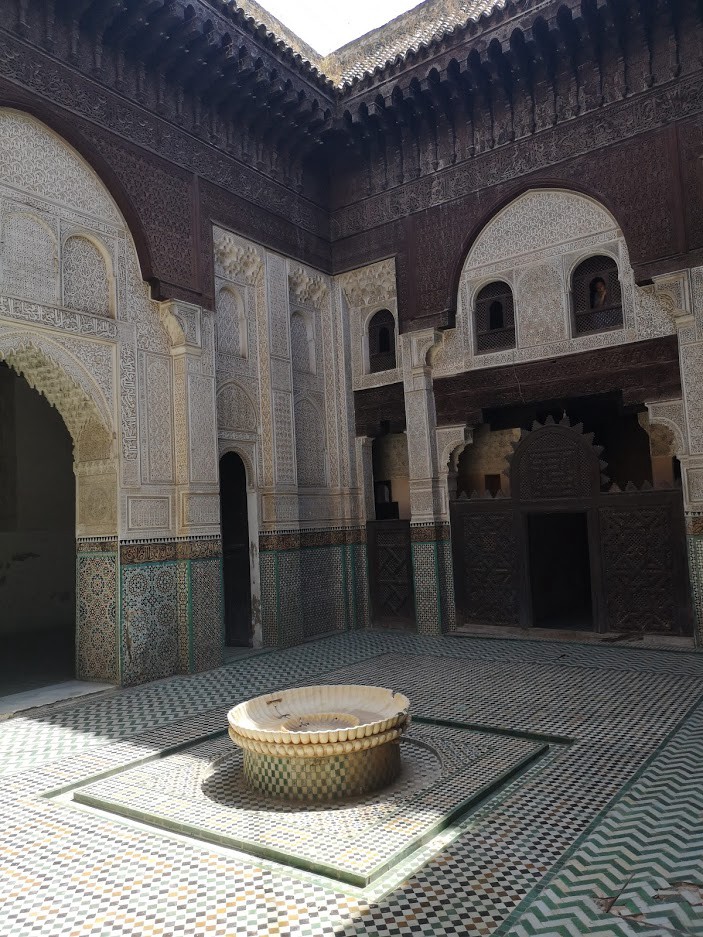
Patio with a water fountain in hot and arid climate improves Indoor Air Quality and enhances ventilation.

In Portugal, under a decree issued by Antonio Salazar, a longtime dictator, the young generation of modernizing architects set off in the 1950s on a journey in search of ‘the Portuguese national architecture prototype’. They knew from the very beginning that there was no such thing, but that there were regional archetypes of architecture. The very detailed study showed the diversity and richness of spatial solutions, material construction, the relationship between soil, crops, vegetation and building materials, architectural form and climate, becoming the basis for the success of contemporary Portuguese architecture. The most important projects and architects (Souto de Moura, Távora, Siza, de Amaral) are rooted in regional architecture. Sometimes too literally, copying solutions, sometimes learning. Their approach has not yet received a comprehensive analysis that would verify its real impact on humans and the environment. The question arises: when do comfort and safety bring unnecessary luxuries that negatively affect the environment.

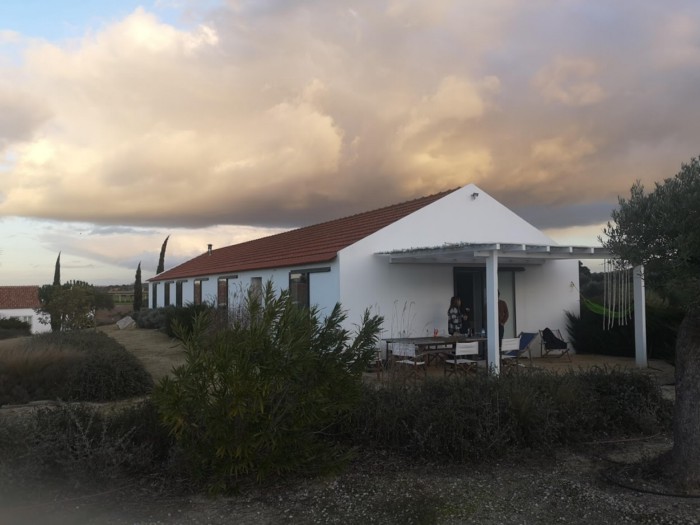
Renovation of a barn for a house in Alentejo uses a typical solution from the region. The porch with vine gives shadow in the hot summers and in the winter (leafless) allows the Sun to heat the interior and exterior walls.

So, how to follow? Should we copy? Definitely not. Architecture is a mirror of society, its thoughts, ways of life, and social relations. After all, none of us, no matter if we live in the countryside or in the city, no matter if in Portugal or Cambodia, lives in the same way as several decades ago. We cannot go back literally to the architectural patterns of the past. It was Lewis Mumford who wrote about it decades ago in The South in Architecture:

If someone tries to recreate that (historical) architecture today, every element of it will be evidence of forgery (…) after all, we cannot copy the life of (others) from the past.

Nevertheless, careless attempts to copy lead to the creation of architectural pastiches or decorative facades for example. The chance becomes a farce, and it is also not very funny. What’s more, to make it more difficult in rural construction, we can expect traps. The native architecture, created in a certain location, was subject to a complementary tendency: evolution and diffusionism. And it does not always respond to local conditions. These two phenomena, described by Claude Lévi-Strauss in Structural Anthropology, show how a certain pattern (like chimney type and height) of culture evolves and at the same time borrows from its neighbours or allies. And it also reminds us that there is no “pure” pattern that was created without contact with others. Such a process was described in the ’90 by Susanne Roaf based on the windcatchers of Yazd in Iran. The measurements showed that their various shapes and forms, widespread in the Middle East were created to ensure thermal comfort, based on changes in temperature and humidity in different climatic conditions. However, some of the patterns (shapes, sizes, heights, etc) travelled with the inhabitants or invaders, disregarding the climate and its correct operation — it was, for example, an element of identity or fashion. Moreover, such a pattern might have a negative effect. Therefore, when using vernacular patterns, one should look at them critically and check whether they are really responding to the climate. This can be done with the help of on-site measurements, tests or computer simulations, which show whether a given solution actually improves ventilation in the building or provides better lighting. Knowledge on this subject is just emerging and we in Dosta Tec are working on that too.

The application of vernacular solutions by imitating good practices, forms of space organization, massing(shape and type of roof, proportions), and passive solutions can be effective tools in the fight against global overheating. We can imagine, for example, a 5-storey residential building in Porto with a steep roof and large arcades that protect residents sitting on the mezzanine from rain, or a large patio that allows for better ventilation on hot days. However, for any such solution to actually work, it must be tested, not only from the point of view of energy efficiency or ventilation but other elements that testify to the efficiency of the building in a given context. Perhaps it is worth returning to the idea of ​​critical regionalism?

Adrian Krężlik

co-founder of Dosta Tec

Buildings’ Thermal Behaviour: Black, White and Grey Boxes

If an engineer wants to model a building to solve problems in the energy realm, there is not a single, unique way to go about it. There are many methods to choose from to predict a building’s energetic performance. The most important aspect of this practice is typically thermal characterisation. Indoor well being and comfort depend, for the most part, on what goes on with indoor spaces thermally. But the virtually infinite combination of location, orientation, shape, window-opening patterns, materials and other variables makes this characterisation complex.

But what is an engineer really doing when they characterise a building thermally? In very simple terms, they are calculating a building’s thermal inertia. This physical concept is defined as the “capacity of a material to store heat and to delay its transmission” [1]. In the field of buildings, it defines the rate and readiness with which a building’s thermal mass cools or heats itself. For example, a thick stone wall has high inertia: it stores heat energy when exposed to direct sun and releases it during hours after the sun sets.

Normally, the key associated physical properties are:

● Heat Capacity “C”: how much energy a building can store per unit of temperature difference — the “store heat” part of the definition above.

● Heat Transfer Coefficient “HTC”: the speed at which heat exits a building when it’s colder outdoors (and the opposite flow) — the “delay its transmission” part.

Initially, one could believe that having great knowledge of the materials that a building is made of could be enough to predict how heat enters and leaves the indoor spaces along a day, week or year. This is true for simple buildings. Think of a simple house in Alentejo: it could be practically a shoebox made of adobe and ceramic roof-tiles, with a single glass window and wooden door. The thermal values of adobe, ceramic, glass, and wood are readily available. An engineer would just compile these into the simple design, account for some air-loss rate since no construction is nor should be air-tight (e.g. airflow between the door and the doorframe), and the physical model of the building could be done with fairly accurate results. The method used in this shoebox case is an example of what is known as a “white-box” modelling method. Meaning we know everything we need to know about the physics of the building’s components and develop our model forward from there.

Now think of an old, 2-storey house Porto’s Baixa neighbourhood with asymmetric design, a renovated kitchen, big sliding glass doors to the back garden, and irregular window-opening patterns (carried out by the occupants). The number of different materials and internal gains result in irregular heat flows that make predicting its thermal behaviour from scratch a big challenge. This is where other methods come in, other than pure white-box. For instance: real, historical measured data may be used to understand how the building behaves along the year, and how this affects indoor temperature and thus occupant’s wellbeing. With enough time and resources, this data can be compiled and a predictive model may be developed. This is called a “black-box” model. The result: we do not understand why, but we know very accurately what temperatures we can expect in each indoor space. But you might have already thought of the main issue: engineers don’t usually have enough time and resources to put this work into a simple family house.

However, measured data over short periods of time (e.g. a week) may be combined with a good understanding of the physics of the construction to reach a midpoint in which a model is based on both some empirical data and some physical aspects of the building, mediated by simplified but accurate equations. The name of these methods is naturally “grey-box”. These innovative methods have lately been proven to be quite powerful, and more importantly, to serve engineers’ and human occupants’ needs. Take a look at the graph below. It shows the results of a case study conducted by Hollick et al[2]., where the measured temperature of a room (black line) was compared against the results of 2 grey-box models (dotted blue and red lines). For most applications, it’s safe to say the results are excellent.

February temperature predictions from a grey-box model against real data from a case study conducted in a house[2].

But technology use in modelling doesn’t stop at these grey-box models. Neural networks are being used by engineers to model even more accurately the dynamic nature of a building’s heat flows, and are showing promising results for widespread application[3]. We might soon be seeing a Portuguese rammed-earth, rural, single-family house being modelled on an adaptive neural network model.

Mateo Barbero

Co-founder

— — —

[1] J. Sala-Lizarraga, Exergy analysis and thermoeconomics of buildings, 1st ed. Waltham: Elsevier, 2019.

[2] F. P. Hollick, V. Gori, and C. A. Elwell, ‘Thermal performance of occupied homes: A dynamic grey-box method accounting for solar gains’, Energy Build., vol. 208, Feb. 2020

[3]R. Baccoli, L. Di Pilla, A. Frattolillo, C.C. Mastino, An Adaptive Neural Network model for thermal characterization of building components, Energy Procedia, Volume 140, 2017.

Grey energy

-If we start building only from wood we will cut down all the forests and nothing will be left? That’s why you have to build with concrete … or plastic.

Such statements are often said by (unaware) professionals during meetings, lectures or workshops that I lead. They expose a big knowledge shortfall regarding materials’ environmental impact, though there are multiple aspects to be tackled to avoid unnecessary reductionisms. First off, timber is a renewable source and concrete and plastic are not. Secondly, the question departs from the idea of constant growth, the concept of the contemporary world and the major economies. Indeed, if we are constantly looking for more and more, even timber buildings, or any other ‘eco-material’, will not eliminate the negative impact of construction on the environment. Society operates within the planetary boundaries and the environmental capacity. Exceeding them to have more or to build more has led us to a catastrophe that is on the horizon.

Following the principles of degrowth, before a project is born, two questions must be answered ‘where?’ and ‘what for?’ we are building. Only then ‘how?’. Only thena designer should answer the question ‘what to build from?’. Giulia Sonetti, from the Polytechnic University of Turin, says that the best energy is the energy that we do not consume. Degrowth is a reminder to use materials responsibly and where needed. Does your community need another mall? What is the purpose of the next science and technology park or organic nutrition research centre? Empty buildings are just expensive scenery in the city, with no inhabitants and no purpose from the very beginning they cannot be sustainable.

Energy may be grey

The energy that an energy-efficient building consumes throughout its life is mostly used for its operation. In low-energy buildings it is as much as 60% [1]. The remaining 40% is energy that is needed to obtain the elements of a building, including materials for floors and ceilings, lamps, ventilation system, slab on the terrace, and handrails. And it is important to ponder about this forty percent. Forty percent that is often forgotten. Embodied energy is energy, sometimes called grey, consumed in processes related to the production, transport and delivery of products to the consumer. This approach brings us to the idea of Life Cycle Assessment.

In the life cycle of a material, we can distinguish four stages:

  1. Raw material preparation. Extraction from the ground (inorganic materials) or harvesting (organic materials), cleaning, melting or other preparations. The energy cost of this phase also includes the transport of raw materials from the place of origin to the place of production.
  2. Production. When raw materials are processed into products (windows, tiles or door handles). The energy costs of a project should also account for packaging and further transport to the user.
  3. Operation. If the product needs energy (e.g. a radiator or lamp uses energy in order to function)
  4. Disposal. Composting or further life. This stage involves preparing the material for further life, disassembling it into parts, and processing it.

The sum of these energies corresponds to the whole life cycle of the building. By adding up the amount of energy that a building consumes during its operation and its grey energy, we can evaluate to find the best energy strategy. The simplest way to reduce the total consumption of grey energy is to build durable and to treat each element with attention.

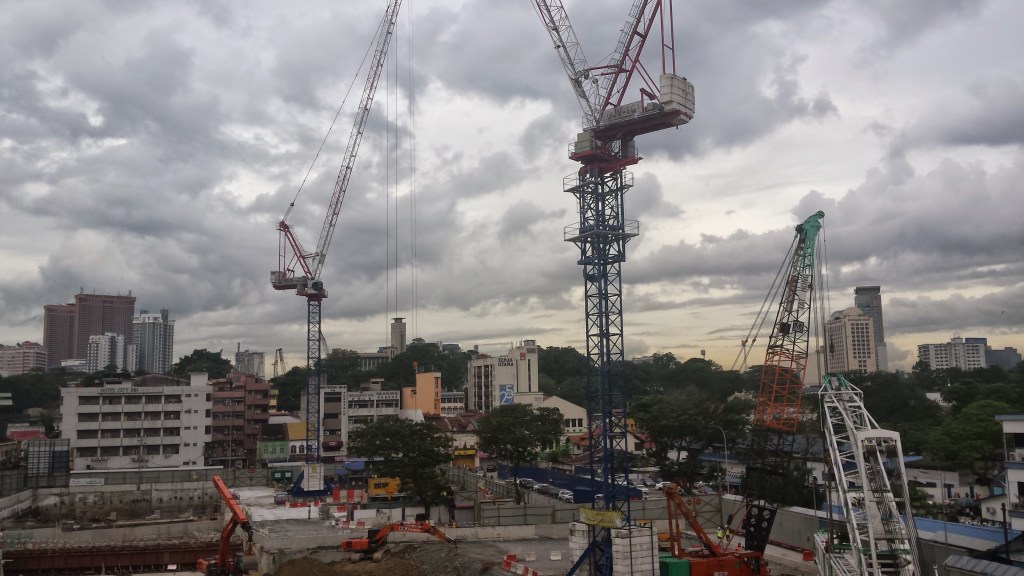
construction site = energy storage

Reusing, recycling, upcycling.

According to scientists from Stanford University [2], reusing building materials saves up to 95% of grey energy that would otherwise be wasted. However, some materials such as brick, tile, and cladding stone can be damaged during demolition and it may be difficult or impossible to use them in a new context. Depending on the material, reusing it can bring various savings (this is mainly due to the processing process), In the case of aluminium it can reach as much as 95% and in the case of glass 20%. Moreover, some processes may use more energy than new materials, especially when transporting over long distances.

The most complex topic is upcycling, which seeks to preserve the value of a material. Again, depending on the material, such a process may or may not be expensive in terms of energy. In a typical situation, the glazing remains glazing, and the handrail is a handrail because the amount of energy needed to produce such an element for operation is so high that its function should not be changed. From an energy perspective, this process appears to be the most efficient as we do not alter the properties of the materials. This topic is also related to the concept of Buildings as Material Banks, where all the buildings and their elements are seen as repositories for future buildings. Where all buildings are designed for disassembly.

To maximize the positive impact of a building on the environment, it is crucial to assess the amount of energy it consumes over its whole life cycle, from sourcing materials through functioning to the next life of materials. Knowing the relationship between how a building works, consuming 60% of energy, and where it comes from, we can plan and design more responsibly.

Adrian Krężlik

co-founder

[1] Thormark C., “A low energy building in a life cycle — its embodied energy, energy need for operation and recycling potential”, Building and Environment, vol. 37, no. 4, (Apr. 2002), pp. 429–435. https://doi.org/10.1016/S0360-1323(01)00033-6

[2]https://lbre.stanford.edu/pssistanford-recycling/frequently-asked-questions/frequently-asked-questions-benefits-recycling

On nearly Zero Energy Buildings in Portugal and Life Cycle Assessment

nZEB: nearly Zero Energy Building in the European Union is a vague concept defined by the Energy Performance of Buildings Directive 2010/31/EU (EPBD). It requires all new buildings from 2021 to meet the nZEB thresholds and ranges and is currently being translated across European countries to local conditions in different ways. The EU is a collection of regions of diverse climates, building cultures, and ways of living, therefore it is impossible to impose a universal model limiting the use of energy in buildings. On one hand, it makes the concept vague, and on the other, it puts a lot of trust in local legislation and knowledge.

Portugal has a privileged climatic condition, with mild winters and warm summers, and prolonged heat waves (primarily in Alentejo), which imply a relatively low energy consumption for heating. At the same time, most of the population inhabits the coastal areas which bring a refreshing breeze in the hottest months. Such advantageous geographic characteristics should be seen as an asset in defining a transparent and ambitious model of nZEB. Hereby we are going to present some observations on how Portuguese nZEB regulations could be updated to include embodied energy, life cycle assessment and on-site energy production. We believe that a better scheme could be achieved — one that contributes to the electrical grid.

The life cycle of a building should be divided into four parts: (A) sourcing and production, construction and assembly, (B) operation, and disassembly, and (D) demolition. A robust nZEB model should include energy consumption limits for each stage of a building lifecycle. Studies on energy use in buildings estimate that the most energy-consuming stage is (B) operation. No doubt, it is typically the longest. Design for full Life Cycle energy-efficiency is a relatively new topic.

Use of energy by life-cycle for energy-efficent buildings

Sourcing and production, the first stage of a building’s life cycle, are directly related to the materials and industrial processes used to build, for instance, a beam or a window. It also includes the energy needed for transportation of any building component from the manufacturer to the construction site.

The construction itself is a relatively short process taking into consideration the lifespan of a building. It typically takes from half a year, for a small investment, up to 5–10 years for a large scale public project. Therefore, the energy consumed during the construction process is relatively marginal, some studies [1] show that it is less than 1% of the total.

Recent studies [1] in the United Kingdom showed that up to 85% of energy is consumed while operating, mostly for heating, cooling and ventilation. In Portugal this number is typically lower, reaching 10–15% [2], although some studies show it could be relatively lower [3]. At the same time, energy-efficient building solutions are more popular in northern Europe, such as Passive Housing, which might reduce the operation to 60% of the total life cycle energy use [4]. This solution, however, requires more energy for the other phases. A relatively larger amount of energy is thus embodied in sourcing and production of the materials, than in traditional constructions. Further activities looking for an energy-efficient building must include embodied energy, and the environmental impact of production and installation of complex HVAC systems, materials used for shell, core and interiors.

Additionally, following the New Circular Economy Strategy of the EU, all endeavours must look for solutions according to the closed-loop cycle. Therefore energy needed for disassembly, deconstruction or repurposing of building elements must be taken into consideration while evaluating energy consumption in the building life-cycle.

The European Green Deal and Renovation Wave directives pay a lot of attention to the issue of energy-efficient buildings within the energy transformation. For regulations to be effective in helping solve the long-term climate problem, they must not only be feasible and consider specific local conditions, but they must also include a robust vision of the energy implications of buildings throughout their whole existence.


Adrian Krężlik
co-founder

[1] Oliveira S. et al., Energy modelling in architecture: A practice guide, 1sted. RIBA Publishing, 2020. Available: https://www.taylorfrancis.com/books/9781000033830 https://doi.org/10.4324/9781003021483

[2] Pacheco-Torgal F. et al., “Embodied Energy versus Operational Energy. Showing the Shortcomings of the Energy Performance Building Directive (EPBD)”, Materials Science Forum, vol. 730–732, (Nov. 2012), pp. 587–591. https://doi.org/10.4028/www.scientific.net/MSF.730-732.587

[3] Mourão J. et al., “Combining embodied and operational energy in buildings refurbishment assessment”, Energy and Buildings, vol. 197, (Aug. 2019), pp. 34–46. https://doi.org/10.1016/j.enbuild.2019.05.033

[4] Thormark C., “A low energy building in a life cycle — its embodied energy, energy need for operation and recycling potential”, Building and Environment, vol. 37, no. 4, (Apr. 2002), pp. 429–435. https://doi.org/10.1016/S0360-1323(01)00033-6

Why Simulate Buildings?

Data-Driven Decision-Making (DDDM) is a crucial part of doing business. What started as a niche practice has developed into an everyday practice for leading organisations in virtually every industry, with proven capacity to capture value[1]. It is used for operational, structured decision-making as well as strategic, unstructured decision-making. But what is it, and how does it fit into Building Engineering and Design?

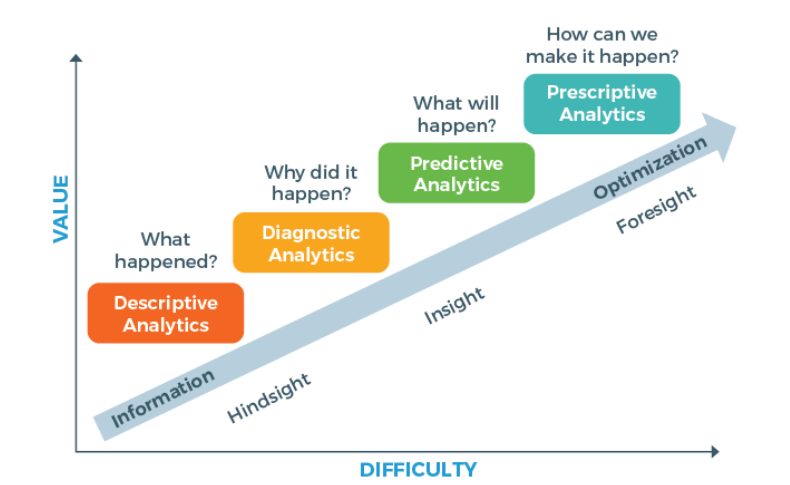
By growing levels of maturity, the decision-making analytics process may be understood as shown in the image below. As the analytical models grow in complexity, so does its potential for capturing new value. This happens as decisions are progressively based more on true insights, and less on the intuition of the decision-maker. Simulation tools may be applied anywhere from Diagnostic to Prescriptive analytics, depending on the complexity of the model. Measurement is the most primitive form of analytics, simulation provides knowledge of higher value, and optimisation searches for the best possible combination of all decision variables.

Source: TBM Consulting Group

In the field of building engineering, not all knowledge is technical. There is significant popular knowledge that may be sourced and combined with optimal engineering practices. That is, coexistence of intuition with analysis. This is essential for the development of urban areas — the best of each field may be sourced to build energy-efficient buildings that stay in harmony with existing practices. This is where simulation tools come into the scene: inclusion of analytical thinking into early stages of the design process provides a wide array of alternatives that may be otherwise invisible to the designers and engineers, and too costly to consider in late stages of construction. Some applications:

  • Comparing of (traditional and Innovative) insulation materials for a façade renovation
  • Analysing photovoltaic potential of a site and convenience of solar panels
  • Studying the effect of possible future buildings surrounding the designer’s site
  • Understanding the effect of current and future climate on the thermal comfort of a building

Simulation models have proven positive effects on the design process. They may be used to reduce energy intensity of a building (energy use per square meter), increase positive environmental impact, increase thermal comfort, optimise lighting of spaces — applications are endless. Once validated with reality, their potential is most significant, as scenarios and variables may be tested with relatively low computational costs and known uncertainty levels. For instance, sensitivity of indoor human wellbeing to weather events has been tested in Southern Europe by using multiple weather profiles and analysing the effect of each simulation run on thermal comfort, keeping all other parameters constant[2].

At Dosta Tec, we believe in a collaborative model between engineers and designers. This is one of the keys to evolve the built environment into a clean, healthy, and energy-efficient version of itself that integrates into the urban landscape.

Mateo Barbero

co-founder

— —

[1] Orlando Troisi, Gennaro Maione, Mara Grimaldi, Francesca Loia, “Growth hacking: Insights on data-driven decision-making from three firms”, Industrial Marketing Management, Volume 90 (2020) 10.1016/j.indmarman.2019.08.005

[2] A. Curado, V.P. de Freitas, “Influence of thermal insulation of facades on the performance of retrofitted social housing buildings in Southern European countries”, Sustainable Cities and Society, Volume 48 (2019) https://doi.org/10.1016/j.scs.2019.101534

Pre- and post-pandemic occupancy schedules

Occupation schedules inform designers (architects and engineers) on the way of living and working of inhabitants. Such schedules are developed based on questionnaires and give a general idea of when a house is occupied, and, at the same time, for which period thermal or visual analysis should be performed. A detailed survey allows cutting energy expenses and can influence building design. It is possible that in the hottest months a house is not occupied since the entire family is on holidays and there is no need to design ventilation for temperature peaks in August.

Prepandemic domestic space had a certain mode of occupation in Portugal that has changed. A study by a team of scientists from the University of Minho [1] shows that during weekdays, inhabitants tend to leave their houses between 8 and 9 AM when the occupation drops from 80% to 15%. Occupancy has a small peak around lunchtime, reaching about 20%. Inhabitants used to return to their homes between 5 and 9 PM. The early afternoon hours are spent between the living room and kitchen, while the morning hours in the bedroom. The weekends and holidays paint a different picture. Most people stay at home until early afternoon, mostly in their bedrooms or living rooms. They usually get back to their houses around 5 PM and spend most of the time in the living room.

Home or office?

This kind of occupancy is most likely the past. The pandemic of SARS-Cov-2 that began in 2020 brought significant changes in the way that we work. The home office, in Portugal known as teletrabalho, has become a new model of work. Thousands of firms, organizations, and public administration have shifted to work remotely in virtual spaces. Livingrooms and kitchens equipped with new desks and table lamps have become temporary (?) working spaces. Such modality of work has already been exercised for several years, mostly by young companies, especially in the field of IT. And it most likely is going to stay with us for a longer period of time. The lease for large office spaces is typically a long-term contract, which is why we are still seeing many of these places under the label of large companies. But as soon as the leases finish these spaces are most likely going to get empty. Companies are already announcing to their employees that there is no coming back to full-time work at the office — it would be a hybrid between the home office and a traditional one. According to a survey by Hays Portugal from 2020, most employees (+90%) are in favour of such a solution, since they are looking for the flexibility of working hours and can save their commuting time. Occupancy schedules need to be revised with a clear division of work and leisure areas. At the same time, space design and performance need to be adjusted. Houses have not been thought for office work — for the last seventy years, they simply have been becoming more comfortable and cosy. On the other hand, extensive research has been done in the field of ergonomy of workspace, adequate daylight, air quality, and thermal comfort, all of which boost productivity and ensure the well-being of the workers.

Future occupancy schedules focus not only on the formal flexibility of space but also on thermal and visual ones. The pandemic occupancy schedules in the times of lockdowns have not been analyzed yet, although we know that shared spaces of the house become offices and the private ones keep their original function. From the point of view of thermal and visual comfort, that was the best solution since the operational temperature and amount of daylight in a living room and in the office space are the closest.

On the 25th of March, the Portuguese government approved the law (Decreto-Lei 79-A/2020) that encourages the home office until the end of 2021. This is one of the first far-reaching signals that might trigger significant changes in the way we design domestic spaces.

We, at Dosta Tec, analyze occupation in close relation with actual space use and propose solutions for building performance to ensure thermal and visual comfort and at the same time enhance energy efficiency. Flexibility and modularity, both in space and energy design, takes into consideration the future use of the building and possible change of a function.

Adrian Krężlik

co-founder

[1] BARBOSA J. A. et al., “Occupancy Patterns and Building Performance — Developing occupancy patterns for Portuguese residential buildings.”, (2016).

Image credits: Jeremy Levine, Attribution 2.0 Generic (CC BY 2.0)

Current and Future Climate in Lisbon and Porto

As we’ve mentioned in our first article, our services are adapted to the changing climate. Building regulations and techniques are still based on observed climate data, but at Dosta Tec we aim at being frontrunners looking into the future. Lisbon and Porto are the two centres of the largest metropolitan areas in Portugal, concentrating almost half of the population of the country. Most of the building stock in these areas dates from before the 1990s (when thermal insulation for walls and double glazed windows were introduced) [1] and is not prepared for the current and future climate. Additionally, it does not reply to current thermal comfort standards or energy efficiency requirements.

The average observed (1971–2000) temperature in January in Porto was 7.6°C, but according to the RCP 8.5 scenario [more here] would be 1.7 °C higher in 30–50 years. This means much warmer and milder winters. In August the average observed temperature oscillates around 21.1 °C, while in 30–50 years it would rise to 23.9°C. At the same time, the amount of extreme heat days is likely to grow. Lisbon in January saw an average temperature as low as 9.3°C, but in 30–50 years, it would rise to 11.2°C. In August the average observed temperature was 23.3°C and would rise to 25.4°C. Also, the average maximum temperature would stay above 30°C during the summer months, posing a big challenge regarding the cooling of buildings

Mean temperature in January in Porto and Lisbon

The northern regions would receive more rain in the winter period, though accumulated in a shorter period of time, while the south would receive even less rain in the summer which may cause additional feedback loops in the local temperature growth. The sky overcast, humidity, and consequently the global radiation hardly change, which guarantee the continued use of solar energy. Portugal has the opportunity to grow vastly in this area and catch up with its European neighbours. The number of windy days grows (by about 10 days a year) which suggests reviewing the use of wind energy.

Generally, almost the entire territory of continental Portugal would enjoy a dry-summer subtropical climate, today native to the southern part of the country, with hotter summers and milder winter, though with more often temperature extreme events.

Fortunately, both cities enjoy the proximity to the ocean and large inland water bodies which regulates the temperature amplitude. For further inland locations, also within the metropolitan area, temperatures tend to vary more, with higher extremes. We should also consider the effect of rising sea levels.

The question that arises here is how to design for future energy efficiency — how much insulation does a new construction need and how to renovate the existing building stock for a warmer climate. How to benefit from renewable energies to design energy-positive buildings? We, at Dosta Tec, are developing strategies that consider these changes to create buildings that change with climate. By means of computational tools, we simulate building behaviour in the future climate.

Adrian Krężlik

Co-founder of Dosta Tec

[1] Edifícios segundo os Censos: total e por época de construção, INE, PORDATA, 2013

The climate data are based on information by Instituto Português do Mar e da Atmosfera in the frame of project Adaptation to Climate Change and Portal do Clima, http://portaldoclima.pt/